












Most candle jar orders are not lost in production. They are lost at the sample stage, months earlier, in a detail nobody wrote down.
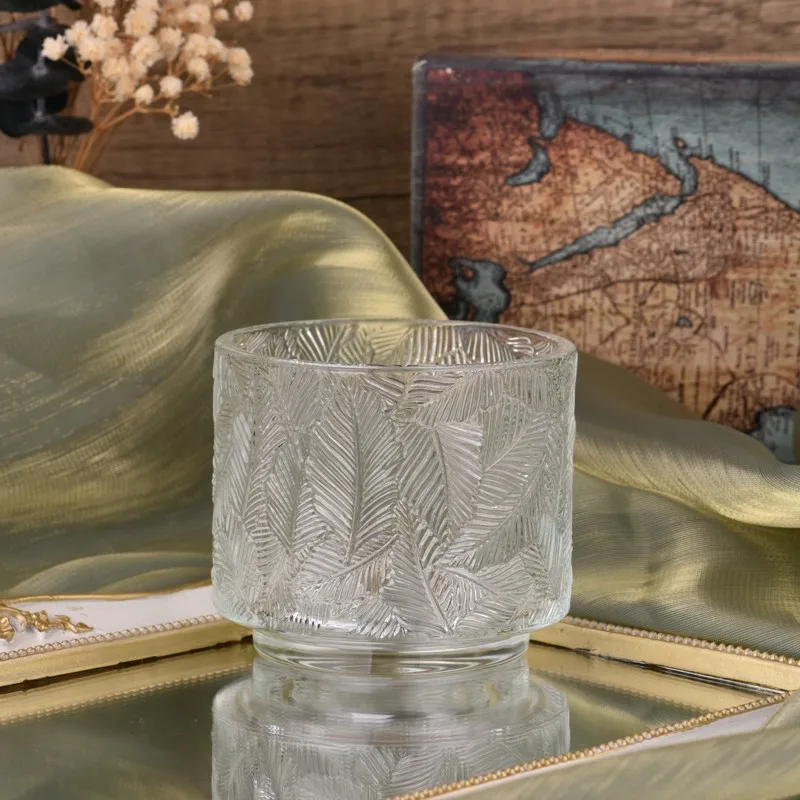
A drawing shows a shape. A sample shows a product — the weight in the hand, how the rim catches light, whether the lid seats with a soft click or a wobble. Everything a buyer and a factory can disagree about later is settled on that one piece, and settled cheaply, because at that point nothing has been tooled for a full run.
Approve the sample and you have written the specification. Everything after that is repetition.
01What a sample actually decides
A sample is not a preview. It is the definition. Once it is approved, the mould, the glass batch, the lid interface, the finish parameters and the packing insert are all measured against that single piece — not against the drawing, and not against the description in an email thread.
That is why the questions which matter at sampling stage are physical ones: how thick the wall is and how evenly that thickness sits around the vessel, what the empty jar weighs, whether the base sits flat on a table, whether the lid lifts with one hand, and how a flame reads through the wall once the candle is lit. None of these survive a screen.
Two jars that look identical in a rendering can sit completely differently in the hand — and that difference is what your customer is buying.
02What we need from you before sampling starts
You do not need a finished specification to start a conversation. A drawing, an existing sample, or a photo with a diameter and a height is enough to open the project. From there we work through:
- Intended wax weight, which drives vessel diameter and wall thickness.
- Lid direction — glass, metal, wood or ceramic, and whether it needs to seal.
- Surface treatment you want to explore: frosted, sprayed, electroplated, screen-printed or decal.
- Whether the jar carries a private-label mark, an embossed logo, or nothing at all.
- Packing format: bulk carton, retail box, gift box, or an insert built for a specific retailer.
None of those are settled by ticking a box. Feasibility is confirmed on a physical sample, and if a combination will not work at your target cost, that is a conversation to have before tooling rather than after it.
03Three points where a candle jar project is won or lost
Most of the cost of getting a custom candle jar wrong is committed at three moments. Each one has a single pass-or-fail test.
- Structure and capacity confirmation
- Vessel diameter decides wax weight, burn behaviour and the lid interface. Get it wrong here and every later step becomes compensation for it.
- Surface and finish, confirmed on a physical piece
- Frosted, sprayed or electroplated changes the hand feel and how the flame reads through the wall. Confirm it on a sample; a rendering cannot show it.
- Packing insert designed alongside the jar
- Inner card, foam or moulded pulp is what holds the jar in transit. Designed after the jar exists, it rarely fits the first time.
We work these three in sequence rather than in parallel, because each one constrains the next. Changing a decision later is possible; changing it after tooling is what costs money.
A candle jar order is not really a purchase of glass. It is an agreement on a standard. The approved sample is that standard — which is why we treat the signed piece, not the drawing, as the reference for every later carton.
04From approved sample to the production run
Once a sample is signed, the project moves into repetition. Tooling is prepared for the confirmed shape, a trial run produces the first pieces off that tooling, and those pieces are compared against the approved sample before the run continues. If they do not match, the run stops there, before any of the goods are packed.
What stays fixed across the run: the shape, the wall thickness range, the finish parameters, the lid interface and the packing insert. What we raise in advance rather than afterwards: the places where a glass process still leaves room for variation. Tone across a batch and print registration are the two that need a tolerance agreed before production starts, not after the goods are packed.
05What you can verify before you commit
You should not have to take a supplier's word for anything that can be shown. On a candle jar project, these are the things you can hold or read:
- The physical sample, in your hands
- Not a rendering and not a description. Weight, rim, base flatness and how the lid seats only read on a real piece.
- Your own approval record
- Whatever you sign off on becomes the reference. Bulk is compared against the piece you approved, not against a written description of it.
- Inspection arranged on the basis your QC already accepts
- Sampling inspection or full inspection can be arranged, and the basis is yours to name — the one your own quality team already works to. You name it; we work to it.
Where something cannot be demonstrated on a physical piece or in a document, we leave it out of the conversation. What remains is a short list, and every line on it can be checked.
06When a change is still cheap
Design changes are a normal part of a candle jar project. The question that matters is when they arrive. Before tooling, a change costs a revised drawing and a new sample. After tooling, the same change costs the tooling — and the schedule that was built around it.
So we front-load the decisions that are expensive to reverse: capacity, lid interface, finish direction and packing format. If you are still exploring a look or a size, say so at the start rather than approving something provisional. A provisional approval is the one kind of approval that does not work.
07The conclusion
A custom candle jar order runs on a simple rule: agree on the piece, then repeat the piece.
Everything else in the process — the drawing, the tooling, the trial run, the inspection, the packing — exists to protect that one agreement. When the sample is right and the sample is the reference, a production run is a reproduction problem rather than an argument. Send us the jar you have in mind, even if it is only a photo and a measurement; the first useful conversation is about the shape, not the volume.
08Questions buyers ask
How long does sampling take?
It depends on whether the shape already exists. A vessel built from an existing mould moves quickly; a new shape needs tooling first, and the tooling is what sets the sequence. Rather than quote a number that ignores your project, we give you the sequence and the checkpoints, so you always know where the order stands.
Can you match a sample we already have?
Yes, if we can work from a physical piece or from a drawing with dimensions. We compare against your piece rather than against a description of it, and we tell you at sampling stage which aspects cannot be matched exactly. That conversation is worth having before a run is committed, not after.
What is your MOQ?
MOQ is set per item, not per order. That is what makes a mixed container possible on a first order: each item has to reach its own minimum, but the container carries several items. The figure for your jar depends on the mould and the finish, so it comes back with the quotation rather than before it.
Can we combine several items in one container on a first order?
Yes, provided each item reaches its own MOQ. Mixed containers are normal for first orders — buyers use them to test several designs in their market at once instead of betting a full container on one. Send us the full list and we will tell you which items need adjusting.
What happens if bulk does not match the approved sample?
Then it is ours to resolve, not yours to negotiate. The approved sample is the reference for both sides, which is the entire point of approving one. Short of a signed change, anything measuring outside it is for us to sort, rework or replace.
Do you make private-label jars, with our logo?
Yes — a private-label mark on the base, an embossed logo, or a printed design on the body. Which of those is practical depends on the shape, the wall thickness and the finish you choose, and it is confirmed at sampling stage before the design is committed.