













The first enquiry was three lines long: a glass candle jar for a new scent line. Minimal shape. Glass that reads as substantial. Nothing that looks ordinary once the candle is lit.
The brief is easy to write. It is much harder to hit.
The problem showed up once sampling started, and it was proportion.
Too tall, and the candle sits low in the vessel and the whole silhouette goes top-heavy. Too short, and it loses the volume a fragrance line needs on a shelf. Too narrow at the neck and the pour is awkward; too wide and the lid has nothing to grip.
Height, neck diameter, base thickness. We adjusted all three over several rounds before the proportion locked.
The sample shipped. The reply was one line: “This is what we wanted.”
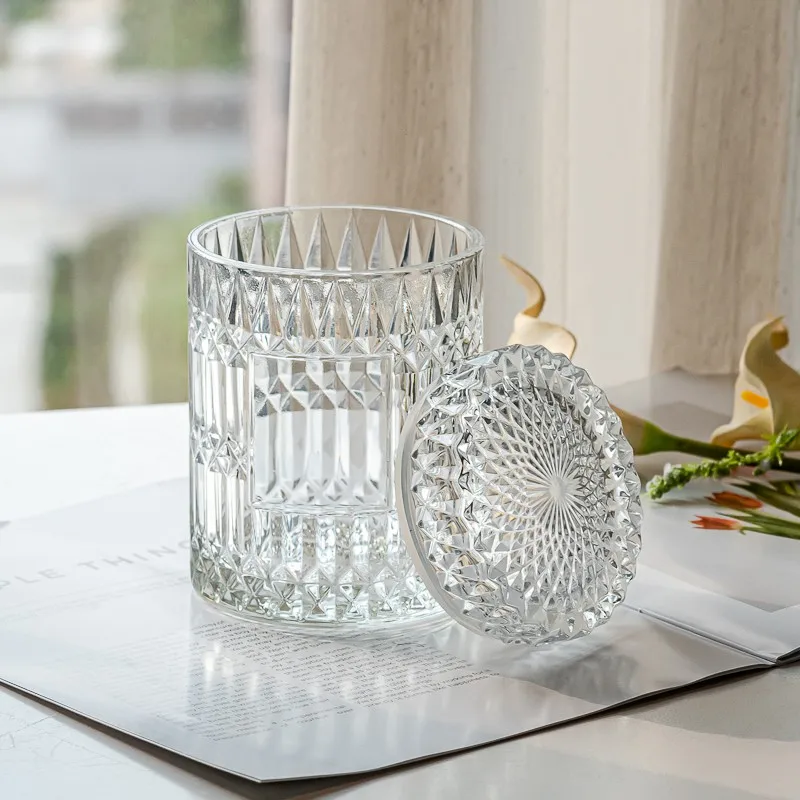
The original plan was a small test batch — small in quantity, not in process. Sampling, sealed-sample approval and inspection were all part of it. After the sample was approved, the brand added a second jar design in a different size: “Since the first one went smoothly, let’s do the second with you as well.”
01Proportion is a scheduling problem, not just a design one
Proportion looks like a design question. On a production line it is a scheduling question.
If proportion is not fixed at the sampling stage, it does not stay in the sample. It travels.
A batch comes out wrong and gets rescheduled. Your launch window moves with it.
The mould is already cut. Any change re-amortises the tooling cost.
Vessels in one collection end up at inconsistent heights. The shelf display stops reading as a set.
So we lock weight, neck diameter and wall thickness during sampling, and production runs only against the approved sample.
A few extra days in sampling is cheaper than a few extra weeks in rework.
02A candle jar is not made at one station
Glass vessels are not simply made. Four stages each change what the finished piece looks like.
Forming sets the silhouette and the neck tolerance. Annealing determines whether internal stress is released — which decides whether the finished piece cracks later. Surface treatment decides whether it feels clear, matte or frosted. Logo application decides whether it ships as a brand product or as generic packaging.
For this vessel the brand asked for weight in the base. We adjusted glass thickness and base structure so it feels substantial in the hand without distorting the overall proportion. Once their logo went on, it looked nothing like the neutral first sample.
It is more obvious once lit. Light passes through the glass and the vessel carries a soft, ambient quality — which is a large part of why fragrance brands choose glass as the candle vessel and as part of the home display.
03A small order is not one candle
The question comes up: can we start with one piece?
On the process side, the answer is that quantity can be small — the process does not get shorter.
For a vessel to be sellable, these steps happen regardless.
- Drawing and structure confirmation — capacity, neck diameter, wall thickness, base
- Not skipped. If the shape is wrong, one piece is wrong too.
- Forming setup
- Not skipped. Forming method is a precondition and does not change with volume.
- Sampling and sealed-sample approval
- Not skipped. Without an approved sample there is no baseline to inspect against.
- Sampling to ANSI/ASQ Z1.4-2008, or full inspection
- Not skipped. Acceptance criteria do not scale with order size.
- Batch test documentation
- Not skipped. The documents needed for retail onboarding are not waived for small quantities.
So a small order does not deliver a few vessels. It delivers a set of conclusions you can take into an internal review: whether the proportion holds up in real glass, how the surface finish behaves against your brand colour, whether the neck and cap fit, and whether the light through the glass is the effect you were after.
With those in hand, scaling to a full order is a low-risk move.
Seen the other way: when sampling and sealed-sample approval are skipped, the risk does not disappear. It moves — to production, where the cost of rework is in a different order of magnitude.
A small order is not one candle. It is a field test of the entire delivery chain.
04What “one-stop” means here
The industry says one-stop so often that the phrase has stopped meaning anything.
Our work is product realisation. From design and sampling through colour, logo and surface finish to volume production, everything runs to the brand’s product definition. That covers glass candle jars — shape, capacity, neck diameter, wall thickness, base structure — along with perfume bottles, drinkware, and components: caps in wood, metal, glass and ceramic, printed gift boxes and wicks.
For us one-stop is not a long catalogue. It is one set of acceptance criteria running end to end. The candle jar and the gift box come off the same quality system, the same inspection record, the same name on the line — that is the part worth paying for.
Turn it around: if one process is where your problems live, moving the rest to a supplier who will align to your standards gets you further than hiring another supplier.
06hat yu can actually chTwenty-odd years, and what a long relationship proves
Sunny Glassware has been exporting for more than twenty years, shipping to Europe, North America and 30-plus countries and regions. Several fragrance houses have been with us for over fifteen years, counted from the earliest product development work — Nest Fragrance among them.
A long relationship sounds like small talk. Buyers know what it actually means: the schedule held often enough to be relied on.
Fragrance brands launch on a seasonal cycle. One missed window disrupts an entire new-product schedule. Fifteen years of orders means it held — not by luck, but because acceptance was written down before it was tested.
That is not craft handed down from one veteran. It is a system: documented procedure, a written acceptance basis, and records that reconcile.
07The conclusion
In the end, business comes down to trust.
But trust is not built by getting along. It is the accumulation of verifiable things: an inspection record that reconciles, a written acceptance basis, someone saying we’ll run your criteria.
A glass candle jar order looks like buying a vessel. You are actually buying three things: whether proportion can be locked at the sampling stage, whether the process can be verified, and whether the supplier can deliver continuously.
That chain is usually proven end to end for the first time by an order too small to look important.
The product is the baseline. What keeps a buyer ordering is the trust built across each delivery.
08Questions buyers ask
Can we combine several items in one container on our first order?
Yes — but each item ordered needs to meet its own MOQ.
How do you handle quality issues?
Inspect the full shipment at unloading. If you find broken or defective pieces, keep them in the original carton and photograph them there. Claims must be raised within 15 working days of unloading; the period is counted from the container’s arrival.
Why work with us?
1. Over 20 years in glassware trade, with sales and engineering teams working directly on your project.
2. 10 production lines and 15 million pieces per month, with process controls holding the pass rate above 99%. [To confirm: QC statistics basis — period, judging standard, sample size]
3. More than 1,800 customers across about 80 countries and regions.
4. One-stop global logistics.
Can we get free samples?
Yes. Samples are free once an order is confirmed; courier cost is borne by the buyer.
What is your MOQ?
MOQ varies by category — candle jars, metal lids, printed boxes. For stock glass jars, smaller orders are accepted. [To confirm: MOQ range per category]
One clarification as well: a smaller quantity does not mean a shorter process. A trial order still goes through drawing confirmation, forming, sampling, sealed-sample approval, and sampling or full inspection.
How big is your R&D team?
Five designers, developing 15 new designs per month.
Can you offer a discount?
Pricing is tiered by quantity. If you want a better unit price on a smaller run, produce a larger quantity in one go and we hold it in our warehouse, releasing it as you need it.