The early spring of 2026 in Shenzhen is still humid and warm. Emily landed at Bao'an Airport. Without taking time to adjust to the jet lag, she headed straight to Sunny Glassware. This was her first stop in China this year, and the tenth year of her partnership with this factory.
Sitting in the meeting room surrounded by sample shelves, she casually ordered a cup of hot black tea, smiled at the Sunny Glassware sales team, and said: "If I had to sum up the past year in one phrase, it's been a close call, but we made it."
Looking Back at 2025: When Tariff Storms Hit, Trust Was the First Line of Defense
Between February and April 2025, the Trump administration issued a series of executive orders imposing multiple rounds of tariffs on Chinese goods exported to the U.S. Rates climbed from 10% and kept rising. Policies shifted every three days. The foreign trade sector was on edge.
Emily's orders were temporarily put on hold.
But unlike other U.S. buyers who rushed to Vietnam or India in search of alternative suppliers, she simply said: “I still believe in ‘Made in China.' Sunny Glassware's quality and service have never given me a headache in ten years. When risks come, we face them together.”
That trust wasn't just lip service.
In May of the same year, the “Joint Statement on U.S.-China Economic and Trade Meeting in Geneva” was reached. Tariffs were suspended, rates rolled back. The moment favorable policies took effect, Emily immediately notified Sunny Glassware: resume shipments, and move the Christmas orders up by two months to lock in production slots. She knew better than anyone: Betting on policy is risky. Betting on a reliable partner is not.
Why Sunny Glassware? The Truth Behind Where Clients Cast Their Votes
While competitors scrambled to move supply chains to Southeast Asia, where tariff costs at one point nearly equaled the value of the goods themselves, Emily and many other U.S. scent brand clients never left.
On the surface, it looked like they “chose not to replace.” Deep down, the truth was: they “couldn't afford to.”
1. Excellence in Product: The True Source of Brand Premium
What Sunny Glassware delivers has never been just “glass containers.” Sunny's best-selling Baroque-style candle holders are inspired by Baroque architecture seen by the designer during a trip to Europe. The design team spent two weeks understanding the concept of using regular, wavy curves and reverse curves to give the architectural elements a dynamic feel. ultimately engraving the "Brightness of Baroque" into the glass in an embossed style.
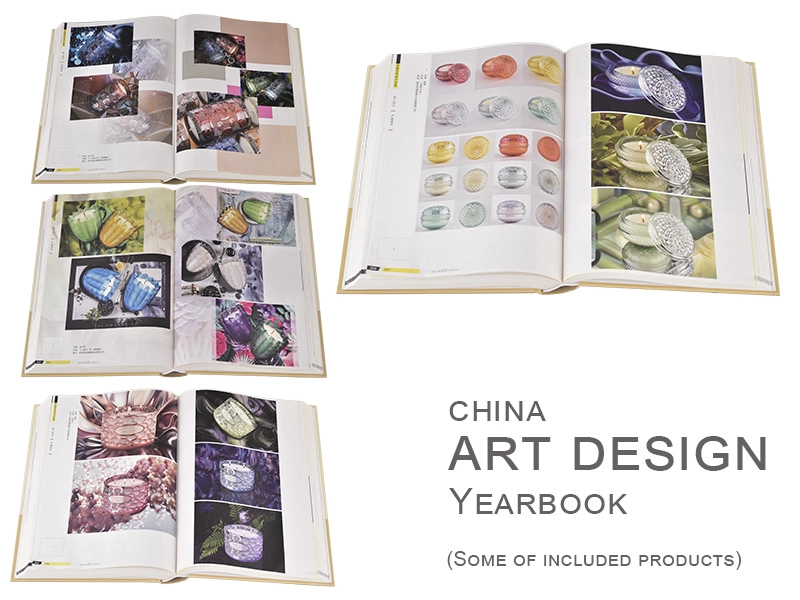
Many of the candle holders have not only won the "Beauty of Made in China" Gold Award but have also been included in the "China Art Design Yearbook".
This isn't OEM. This is co-creation.
While other suppliers were still competing on price, Sunny Glassware had already helped its clients build a brand moat. Emily is willing to pay a premium for this kind of value—even voluntarily covering extra costs for special craftsmanship. Because she knows: these candle holders, sold on premium shelves in the U.S., are worth every cent of that investment.
2. The Obsession with “Zero Defects”: 80,000 Units Scrapped and the Immeasurable Value of Trust
In 2024, a batch of Sunny Glassware candle holders showed barely visible rim inconsistencies due to kiln temperature variation. The client hadn't noticed. The QC report hadn't flagged it.
But Sunny Glassware made a decision: 80,000 finished products were all scrapped.
Emily only learned about this later. She said that was the moment she truly understood the weight of those three words: “Made in China.”
Tariffs can be negotiated. Costs can be shared. But lose quality once, and the brand loses everything.
3. Supply Chain Resilience: Not Just “Weathering the Storm,” but “Sailing Further.”
In 2025, when extreme tariff rumors were at their peak, Sunny Glassware didn't sit idle waiting for policy reversals.
They proactively adjusted their market strategy and turned their focus to the Middle East and ASEAN. Within six months, orders from emerging markets grew by 30%.
What Emily saw was this: This factory doesn't put all its eggs in the U.S. basket.
A supplier that knows how to diversify risk is itself a risk asset for its clients.
Tariffs Are Still in Play, but the Direction Is Clear in 2026
In November 2025, during the APEC Summit, China and the U.S. reached a new trade agreement, extending the suspension of reciprocal tariffs through the end of 2026.
The policy axe hasn't fallen yet. But neither Sunny Glassware nor Emily is anxious anymore.
Because they've been through a full cycle together, and proven one thing:
> Tariffs impact short-term costs.
> But superior products, reliable delivery, and deep-rooted trust, these are the true ballasts that carry you through the cycle. When a supplier's value is already woven into the core competitiveness of its client's brand.
It doesn't come off easily.
So, here's the question
When your U.S. clients are facing rumors of 100% tariffs, when your competitors are “fleeing” to Southeast Asia, and when ocean freight rates are swinging like a roller coaster.
Why, of all places, did Emily still choose Sunny Glassware Glass as her first stop in 2026?
In your industry, what keeps clients coming back—no matter what?